

A process you trust more than your own nerves is the cheapest edge a DIY investor can give themselves and it costs nothing to write down before the market starts arguing with you. I spent years as a broker watching doctors and engineers commit the same sins with their own money, not because they were thick but because they had no plan for what to do next.
Tim and I built FINK around a simple idea. If you run your own money, you need rules you trust more than your feelings in the moment, because your feelings will fuck you over at exactly the wrong time. The ten commandments below are our names for the mistakes that empty a pot. Each one looks harmless on the day and each one has a reason it costs you. The antidote is the five layers we use in FINK OS: Qualify, Enter, Size, Manage, Exit.
1. Thou shalt have a process
If you can't write down how you invest, you don't have a process, you have a hobby. Hobbies are allowed to lose money. The original sin of DIY investing is deciding from a mood. At FINK every holding goes through five layers: Qualify, Enter, Size, Manage, Exit. Most people only think about one of them, usually what to get into. Getting in is the easy part. It's everything after that that makes or loses the money.
2. Thou shalt decide thy exit before thou buyest
Know what would make you get out before you put a penny in. Improvising the exit after the price has already moved against you is how a small mistake becomes a big one. Your brain will invent every reason under the sun to hang on, that it'll come back or that you'll get out when it gets back to where you bought it. Write the exit in the same note, on the same day, before the money goes in and you don't have to have that argument with yourself.
3. Thou shalt cut thy losers small
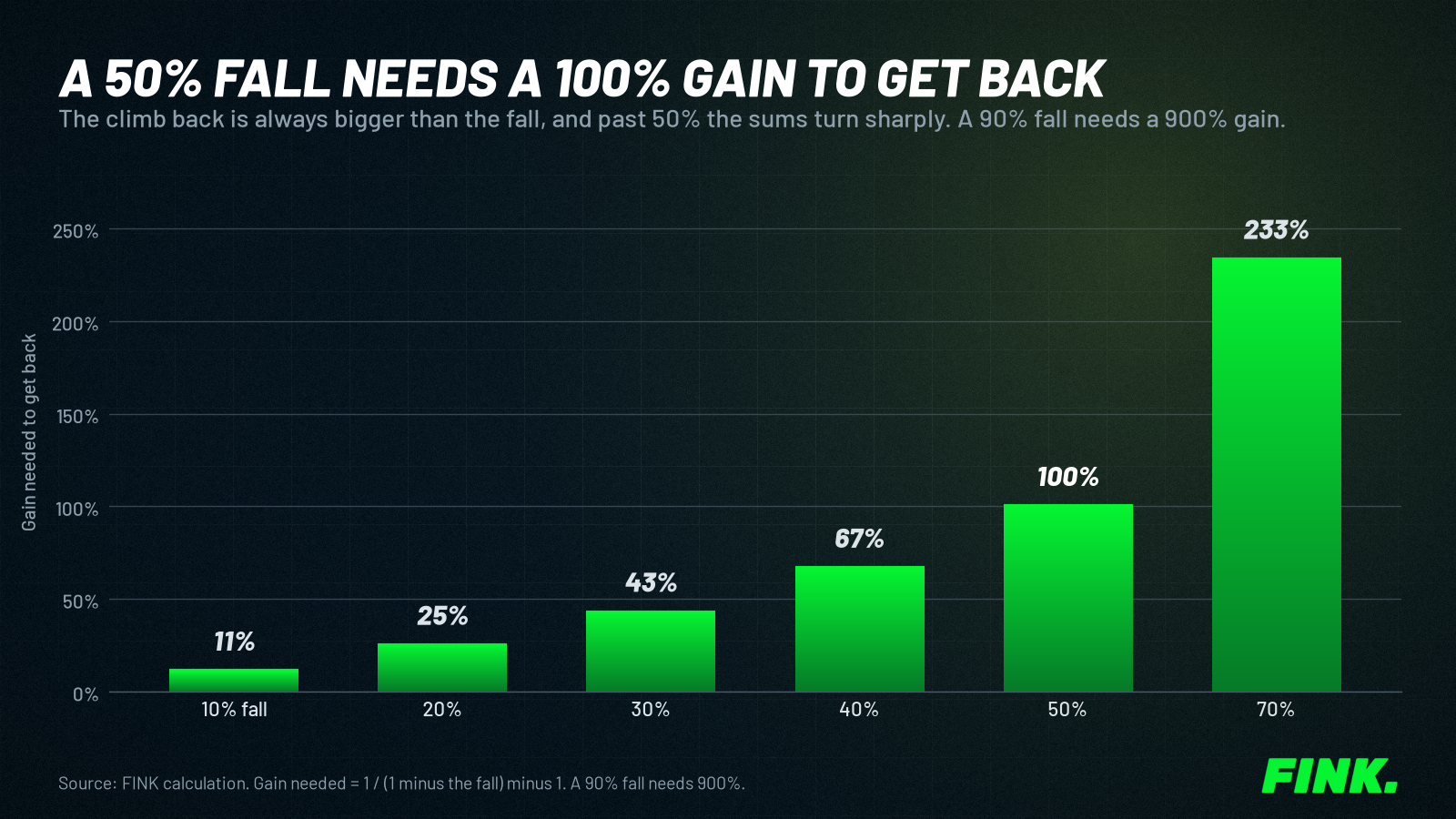
A small loss is the cost of doing business. A big loss is a choice and it's the expensive sin, because the sums are not symmetrical. A 50% fall needs a 100% gain to get back and a 70% fall needs 233%. The people who get carted out of markets are rarely the ones taking lots of small losses. They're the ones who took one big one and froze. Tim puts it well. There is no shame in getting out, none whatsoever and you can always go back in later.
4. Thou shalt let thy winners run
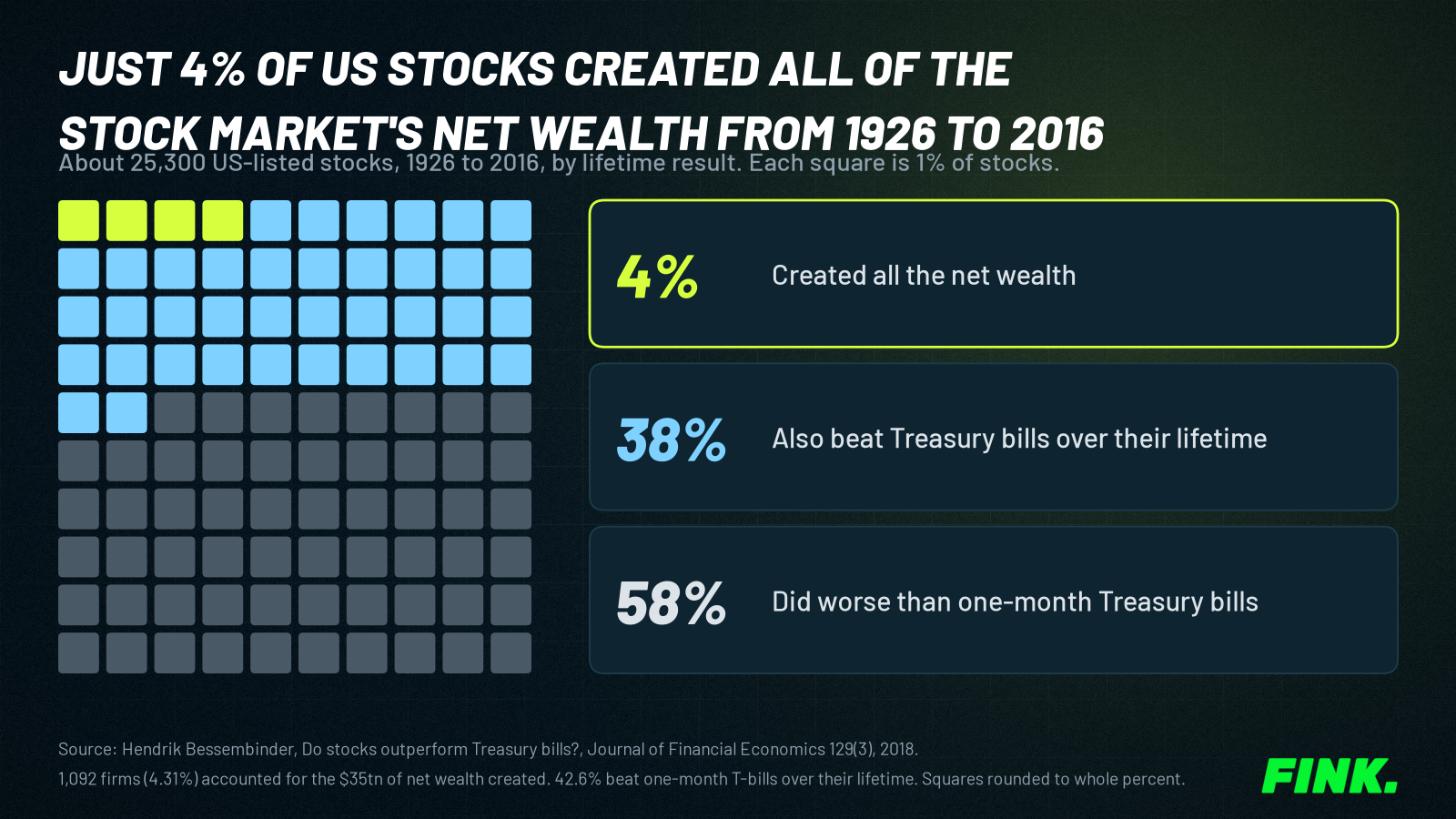
Don't get out of a holding because it's gone up. Get out when price tells you to. Banking a winner early feels virtuous. It is usually the opposite, because a handful of winners do most of the heavy lifting. Hendrik Bessembinder studied every US-listed stock from 1926 to 2016 and found that about 4% of them accounted for all the net wealth the market created. Most stocks did worse than Treasury bills over their lifetime. If you keep chopping the rare winners off early, you never give those winners the chance to exist.
5. Thou shalt size so no single position can hurt thee
Most people obsess over what to get into and very few ask how much. Oversizing is pride and you can be dead right about a company and still get hurt if you put too much in it. Before you put a penny in, write down what a 50% fall in that holding would cost the whole pot in pounds. If that number makes you feel sick, the position is too big. Size is how you survive being wrong and you will be wrong.
6. Thou shalt invest with the trend
We're long-only trend followers and we want stocks that are already going up, in a market that's going up, not beaten-down names you think are due a bounce. Fighting the trend is how you try to be a hero when the odds are against you. When the S&P and the Nasdaq are rising, individual stocks have the wind at their back. When they're falling, even great stories struggle. As I like to say, nothing good happens under the 200 day moving average. You're not trying to be a hero. You're trying to stack the probabilities in your favour.
7. Thou shalt ignore the noise
Headlines are entertainment. Price is information. Every day there's a new reason to panic or get excited, a tweet or a talking head with a strong opinion and most of it is noise. What we ask instead is who is stuck and what isn't making sense right now. Price tells you what people are actually doing with their money. Opinions tell you what they want you to think.
8. Thou shalt not average down a loser
Putting more money into something that's falling isn't conviction. It's hope with a bigger bill, which is just the first sin committed twice. I've watched it wreck more accounts than a bad stock pick ever did. If a stock is falling, the market is telling you something. We add to what's working, not to what isn't. If you want to put more money into a position, make it the one that's proving you right.
9. Thou shalt keep a journal
If you don't review your holdings you'll repeat your mistakes forever and call it bad luck. One line in a notes app is enough: the date, why you got in, where you'd get out and, later, what actually happened. Over time the patterns jump out, whether you always get out of winners too early or break your rules after a scary headline. A journal takes your silly monkey brain out of the equation and shows you the truth.
10. Thou shalt be patient
The market rewards inaction in a trend. This is Tim's line and it's one of the most useful things we say. Once you're in a good trend with a plan in place, the best thing you can usually do is nothing. Don't fiddle and don't get out because it's gone sideways for a few weeks and you're bored, because boredom trips people up more than almost anything else. Act when price gives you a reason, not when your nerves do. As Tim says, what matters most is what happens next.
The commandments name the sins. The five layers are how you stop committing them. Qualify stops you getting into rubbish. Enter and Size stop you charging in too heavy. Manage and Exit stop you turning a small mistake into a portfolio-defining one. If you want that system written out so you can actually run it, that's FINK OS.
Write the ten down, put them where you'll see them and use them on the next decision, not the last one.
FAQs
What are the 10 commandments of the DIY investor?
Have a written process, decide the exit before you enter, cut losers small, let winners run, size so one holding can't hurt you, invest with the trend, ignore the noise, don't average down a loser, keep a journal and be patient.
Why is cutting losers small so important?
Because the sums are not symmetrical. A 10% fall needs an 11% gain to get back and a 50% fall needs 100%. A small loss is the cost of doing business. A big one is a choice.
What is the investing process behind the commandments?
At FINK it is five layers: Qualify, Enter, Size, Manage and Exit. They are the antidote to the ten sins, written as a system you can actually run in FINK OS.
Sources: Hendrik Bessembinder, Do stocks outperform Treasury bills?, Journal of Financial Economics 129(3), 2018. Recovery sums: FINK calculation.
This is education, not financial advice. Investments can fall as well as rise, and you may get back less than you put in.


