What's the difference between a Lifetime ISA and a stocks and shares ISA?
A Lifetime ISA (LISA) is a savings account with a government bonus and restrictions on withdrawals. A stocks and shares ISA is a tax wrapper for investments with no bonus and no restrictions. A LISA can itself hold cash, stocks and shares, or both (gov.uk).
| Lifetime ISA | Stocks and shares ISA | |
|---|---|---|
| Who can open | Age 18 to 39 | Age 18 or over |
| Annual limit | £4,000, until age 50 | Up to £20,000, shared with your other ISAs |
| Government bonus | 25%, up to £1,000 a year | None |
| What it can hold | Cash, stocks and shares, or both | Shares, funds, bonds |
| Withdraw without charge | First home (conditions apply), age 60+, terminal illness | Any time |
| Withdrawal charge | 25% for other withdrawals. 20% for first homes over £450,000 from 29 October 2026 | None from the government (some providers charge fees) |
| Tax on growth | None | None |
| How many you can pay into a year | One | More than one |
Sources: gov.uk Lifetime ISA, gov.uk How ISAs work, HMRC newsletter 24.
How are Lifetime ISAs actually used?
HMRC publishes yearly figures on LISA withdrawals. The figures say more than most comparisons let on. Since 2022/23, more people each year have paid the withdrawal charge than have used their LISA to buy a first home.
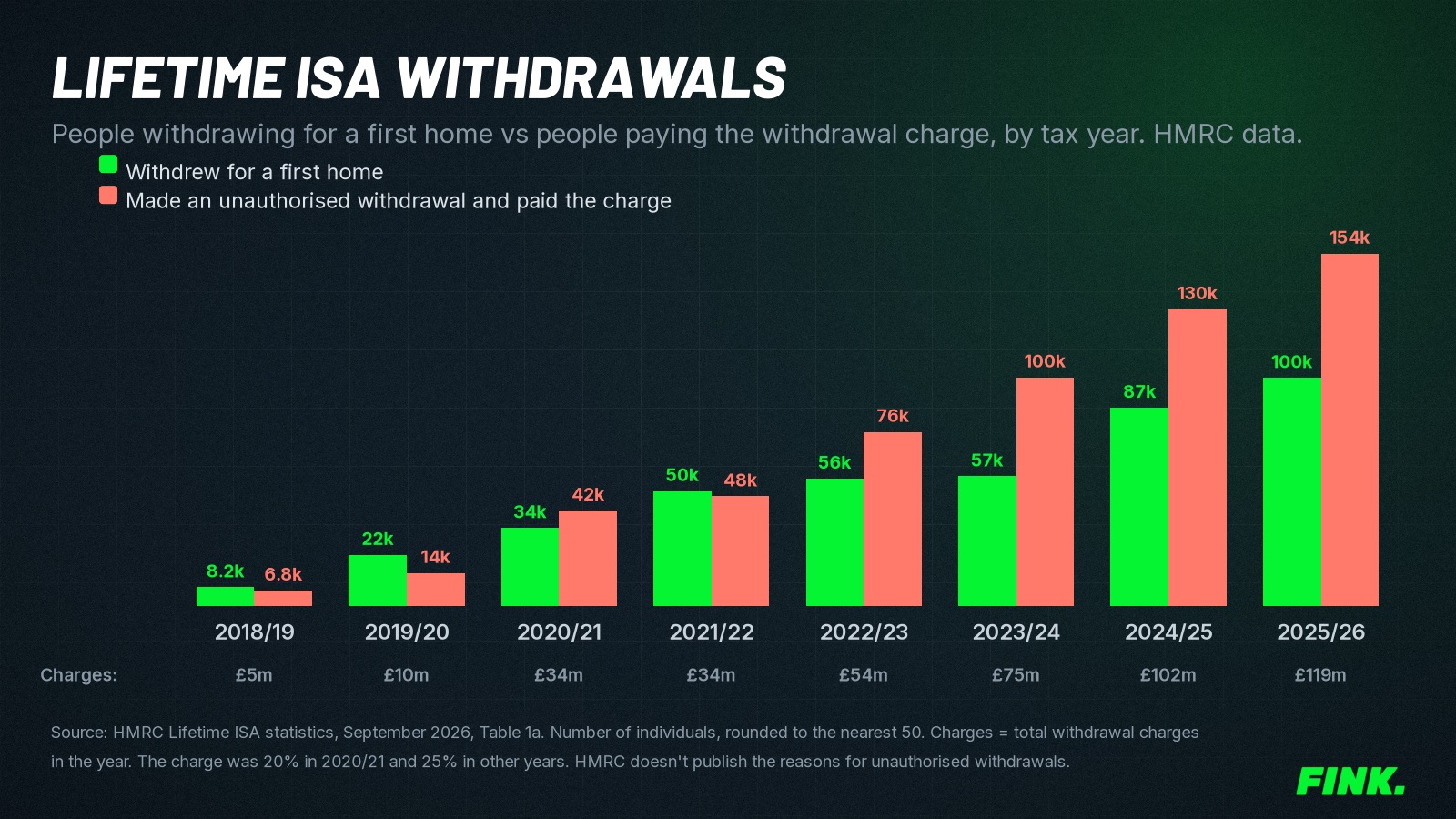 Source: HMRC Lifetime ISA statistics, September 2026, Table 1a.
| Tax year | First-home withdrawals | Unauthorised withdrawals | Charges paid |
|---|---|---|---|
| 2021/22 | 50,250 | 47,950 | £33.6m |
| 2022/23 | 55,700 | 76,150 | £54.4m |
| 2023/24 | 56,700 | 100,000 | £75.4m |
| 2024/25 | 86,700 | 129,750 | £102.3m |
| 2025/26 | 99,750 | 154,100 | £119.0m |
Source: HMRC Lifetime ISA statistics, Table 1a. Numbers of individuals are rounded to the nearest 50.
A few things to keep in mind before reading too much into this:
- HMRC doesn't publish why people made unauthorised withdrawals. Some will have needed the money. Some will have bought a home over the £450,000 cap, which carried the full 25% charge until October 2026. Some may have moved the money into another ISA, which also counts as an unauthorised withdrawal before 60.
- The two groups aren't the same people. Someone could appear in both, in different years.
- More LISAs are open each year. Rising numbers in both columns partly reflect a bigger pool of accounts. HMRC's commentary shows LISA subscriptions rose 20.1% in 2024/25 (HMRC commentary).
Even with those caveats, the data says something plain. The restrictions aren't a technicality. Every year since 2022/23, they've applied to more people than the house purchase has.
For those who did buy, the average house-purchase withdrawal in 2025/26 was £15,407.
What does the LISA withdrawal charge actually cost?
More than the bonus. The 25% charge applies to the whole amount withdrawn, including the bonus, so it takes back the bonus and part of your own money too.
Gov.uk's own example shows it. Assuming no growth, £800 saved earns a £200 bonus, making £1,000. Withdrawing all of it costs a £250 charge, leaving £750 (gov.uk). You put in £800 and get back £750.
| Per £100 of your own money, no growth | 25% charge | 20% charge (first home over £450,000) |
|---|---|---|
| Your money | £100 | £100 |
| Bonus added | £25 | £25 |
| Pot | £125 | £125 |
| Charge | £31.25 | £25 |
| You get back | £93.75 | £100 |
| Change on your own money | −6.25% | 0% |
How we worked it out. Pot = your money × 1.25. Charge = pot × charge rate. So at 25%, £125 × 0.25 = £31.25 and you get £93.75 back. At 20%, £125 × 0.20 = £25 and you get your £100 back.
This assumes no growth or losses. If the LISA is invested and has grown, the charge is bigger in pounds but you may still end up ahead of what you paid in. If it's fallen, the charge comes on top of the loss.
The 20% rate for first homes over £450,000 applies to withdrawals on or after 29 October 2026 and isn't backdated (HMRC newsletter 24).
Which is better for a house deposit?
It depends on your price range, your timeline and your certainty about buying. The bonus is a large head start. The restrictions are what you pay for it.
The case for a LISA:
- A 25% bonus on up to £4,000 a year is worth up to £1,000 a year before any growth.
- Two first-time buyers purchasing together can each use their own LISA and bonus (gov.uk).
The case against, or at least for caution:
- The £450,000 cap. HMRC confirmed in October 2026 that the price limit is staying. Above it, the charge (now 20%) applies.
- Timing. The purchase must be at least 12 months after your first payment and use a mortgage and a conveyancer (gov.uk).
- Plans change. If you end up not buying, renting longer or moving abroad, getting the money out before 60 costs 25%.
- Investment risk. A stocks and shares LISA can fall. Over a short horizon to a deposit, that's a real trade-off against the bonus. Our article on stocks and shares ISA losing money shows how often UK shares have fallen within a single year.
A stocks and shares ISA has none of those strings. It also has no bonus. For money you might need for something other than a first home, that flexibility is the point. For money you're sure is going into a first home under £450,000, the bonus is hard to match.
Can you have a Lifetime ISA and a stocks and shares ISA at the same time?
Yes. Up to £4,000 a year can go into one LISA. The rest of your £20,000 allowance can go into other ISAs (gov.uk). Gov.uk's own example: £11,000 in a cash ISA, £2,000 in a stocks and shares ISA, £3,000 in an innovative finance ISA and £4,000 in a LISA in one tax year.
This is a common split for people aged 18 to 39 who are saving for a first home and investing for the longer term at the same time. Our guide to how many stocks and shares ISAs you can have covers the account rules in more detail.
What's the First Time Buyer ISA coming in 2029?
A new account for first-time buyers, announced at Budget 2025 and confirmed after consultation in October 2026. HMRC says it'll be offered in place of the Lifetime ISA and won't need a withdrawal charge (HMRC newsletter 24).
The confirmed design:
- Launch: April 2029.
- Limit and bonus: up to £4,000 a year with a 25% government bonus, in line with the LISA.
- Bonus cap: the total bonus is capped at £20,000 and calculated on the final account balance.
- One at a time: you can hold only one.
- Transfers: you can't transfer a LISA into it, but a LISA and a First Time Buyer ISA can both be used on the same purchase. Transfers in from other ISAs are allowed up to £4,000. Help to Buy ISA holders can transfer their full balance between 6 April 2029 and 1 December 2030.
- Price cap: the £450,000 cap is kept.
Details on how providers will offer it are still being worked out with industry. For other ISA changes announced at Budget 2026, see our guide to ISA changes for 2027.
Is a Lifetime ISA good for retirement?
It can be part of it, but it's usually compared with a pension rather than a stocks and shares ISA. You can withdraw from a LISA without charge from age 60. You can stop paying in at 50 (gov.uk).
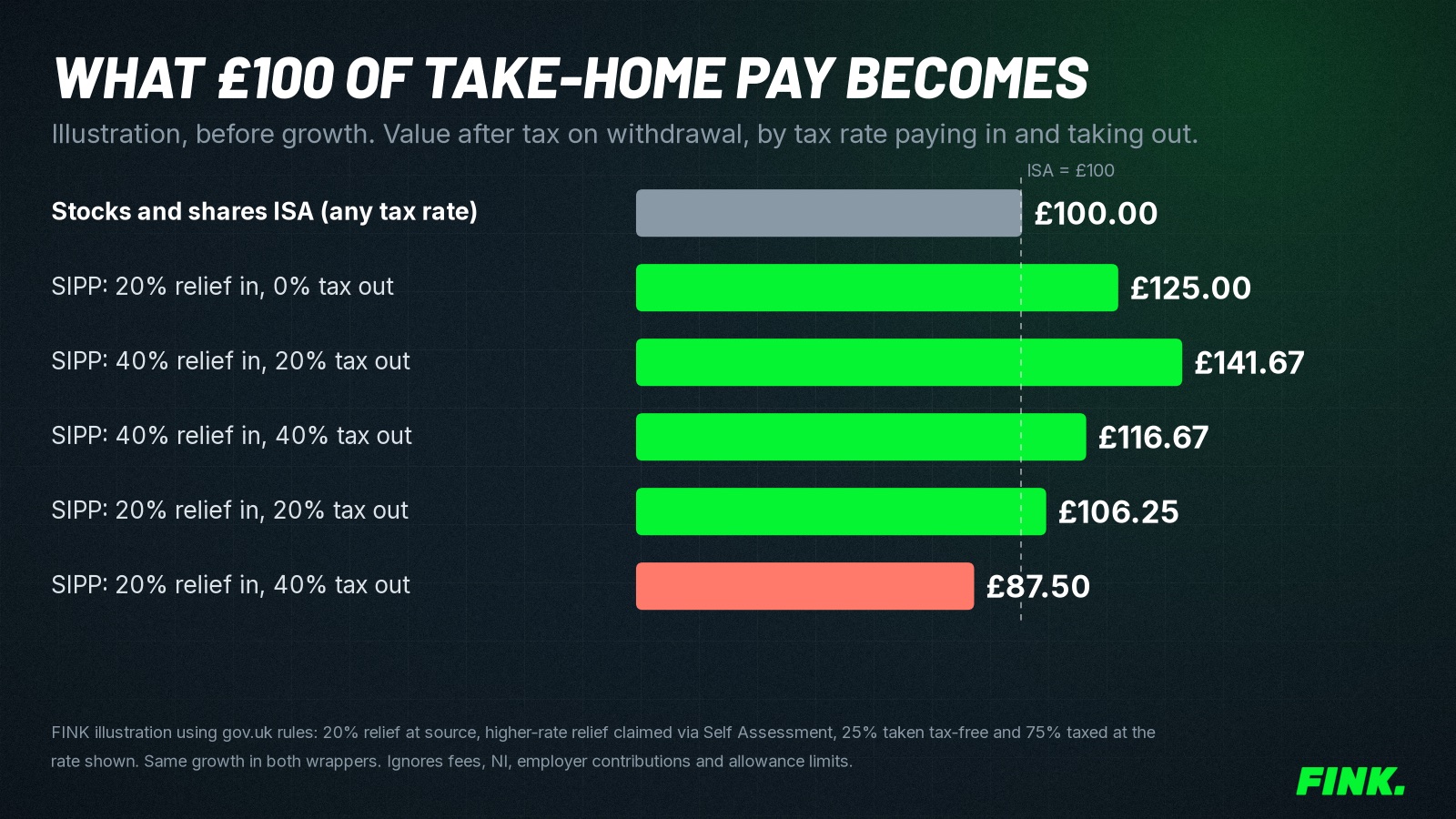
The trade-offs against a pension are covered in stocks and shares ISA vs SIPP. The short version: pension contributions get tax relief and may get employer contributions, but are taxed when you take them out (apart from the tax-free part). LISA withdrawals after 60 are tax-free, but the bonus is capped at £1,000 a year and the money's locked away until then.
Which should you choose?
That depends on your goal and how certain that goal looks. This grid sets out the trade-offs. It isn't a recommendation for any individual.
| Your situation | LISA trade-off | Stocks and shares ISA trade-off |
|---|---|---|
| Sure you'll buy a first home under £450,000, more than 12 months away | Bonus is a large boost. Restrictions likely won't bite | Flexible, but no bonus |
| Might buy, might not | Charge applies if you don't | No penalty either way |
| Likely to buy above £450,000 | 20% charge on withdrawal for the purchase | No cap |
| Saving for retirement, aged 18 to 39 | Bonus until 50, access at 60 | Access any time. Compare with a pension too |
| Money you may need for emergencies | Unsuitable before 60 | Accessible, but its value can fall |
For how a stocks and shares ISA fits a wider plan, see our guide to planning a stocks and shares ISA. If cash is part of the decision, there's cash ISA vs stocks and shares ISA.